| Western
Pine Elfin Callophrys eryphon eryphon Immatures |
| Home - Butterflies - Details |
| Adults Specimen |
| Oviposited on 9th and 12th of June 2009 |
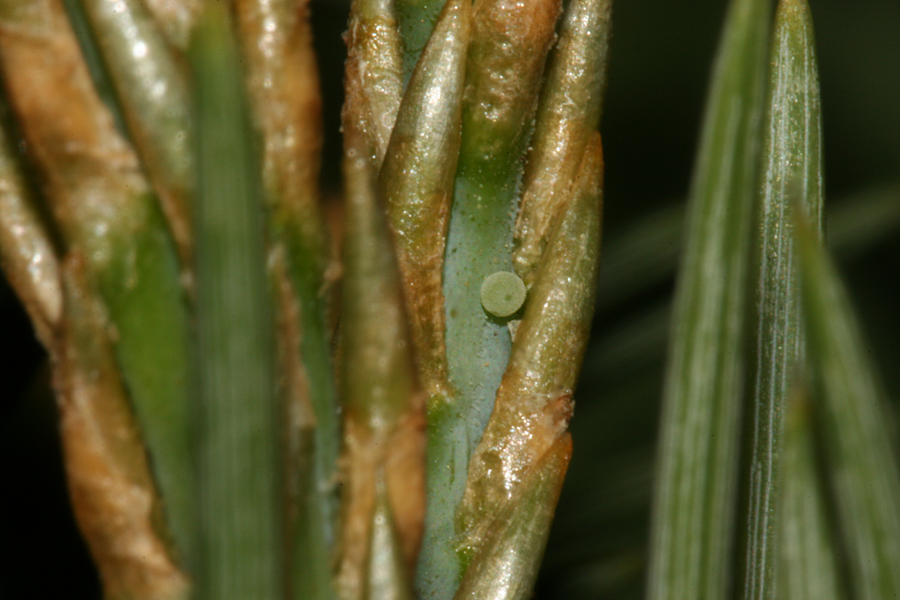
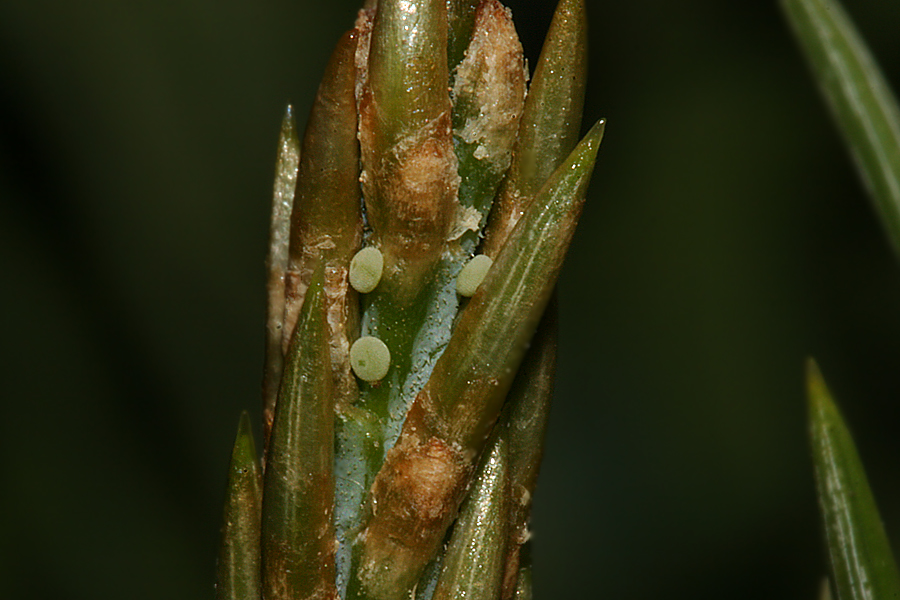
| LARVAE #2 First instar on 15 June 2009 - Photo taken on the same day |
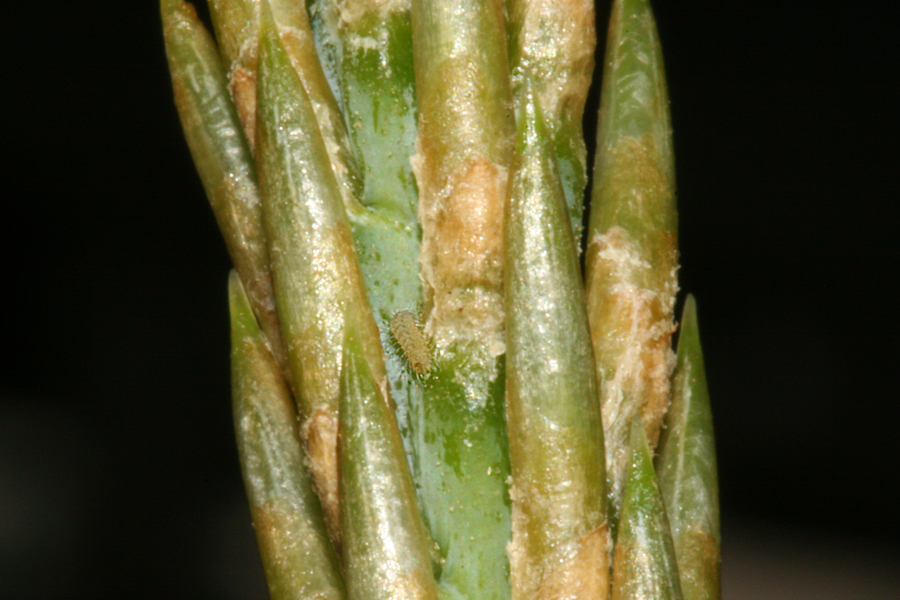
| #3 Molted to second instar 20 June 2009 - Photo on 23 June 2009 |
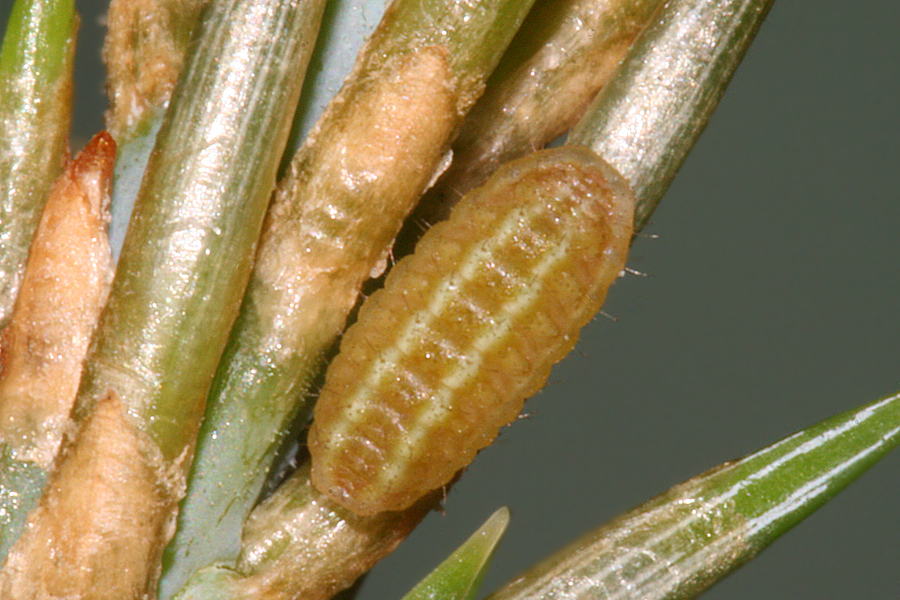
| #1 set to molt to third instar on 23, June 2009 |
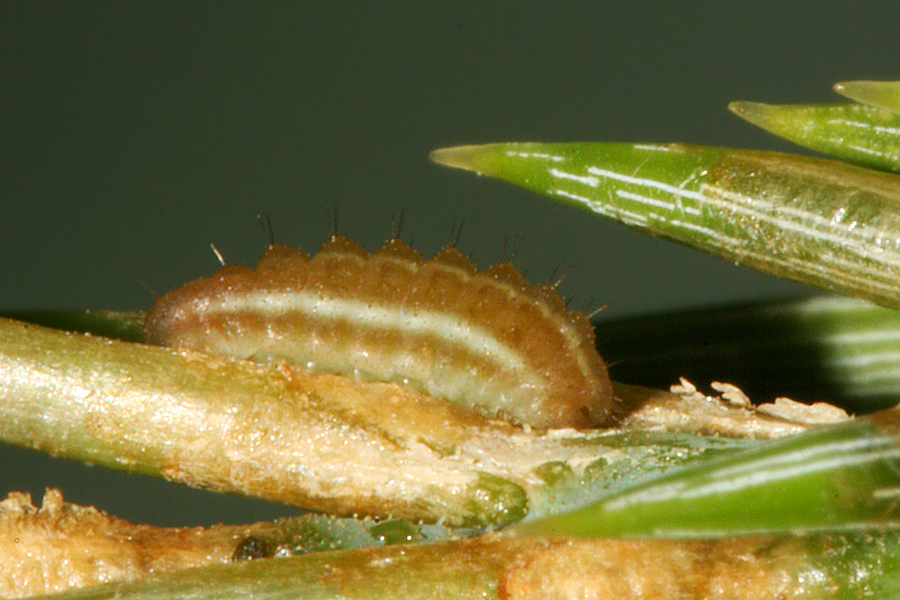
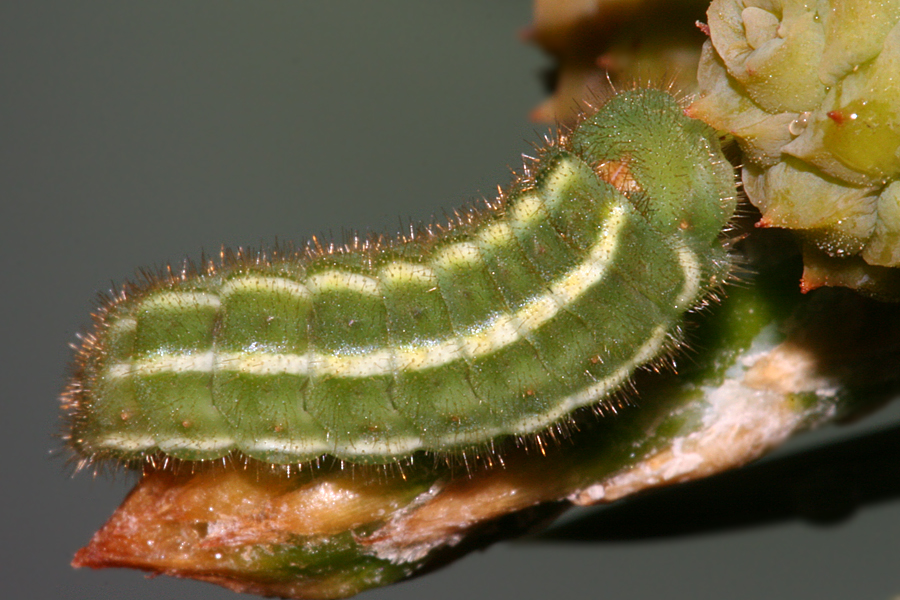
| # 2 Dorsal View -
Molted to third
instar on 24 June 2009 Photo on 26 June 2009 |
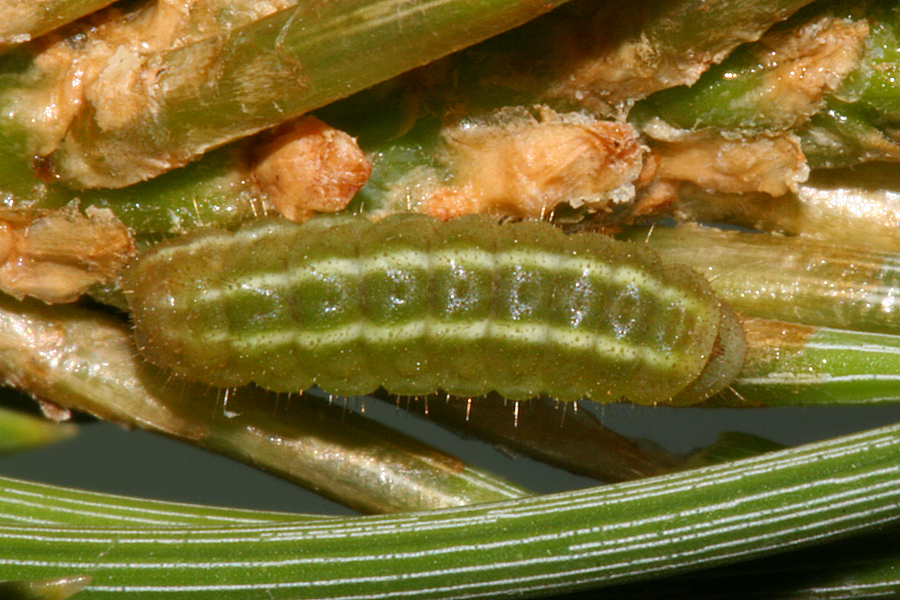
| #
2 Lateral View -
Molted to third instar on 24 June 2009 Photo on 26 June 2009 |
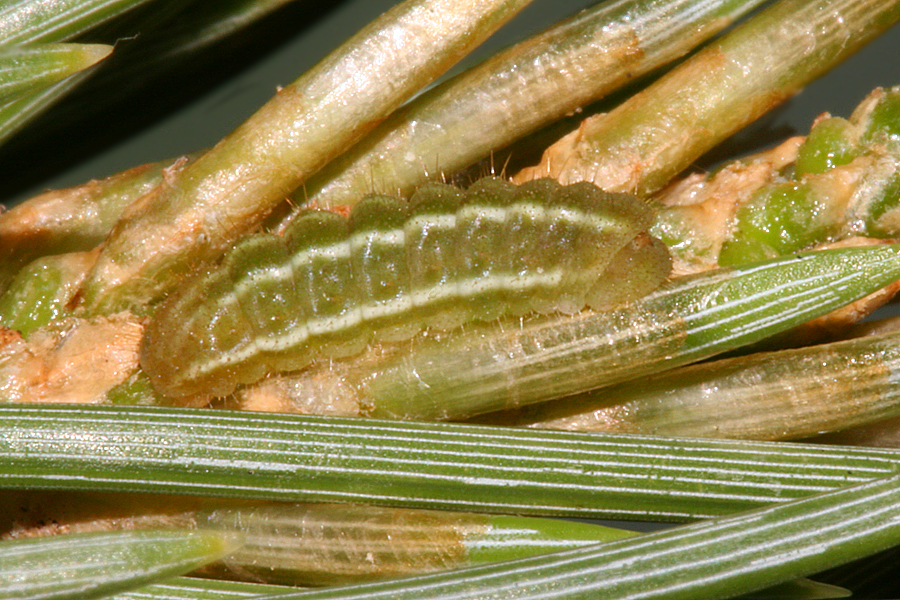
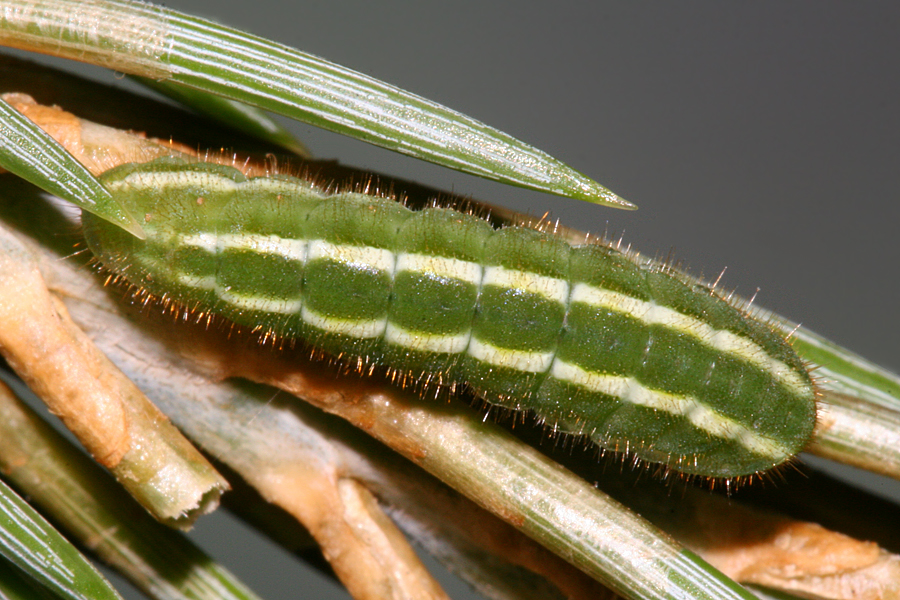
| # 3 Fourth Instar - Lateral View - 1 July 2009 |
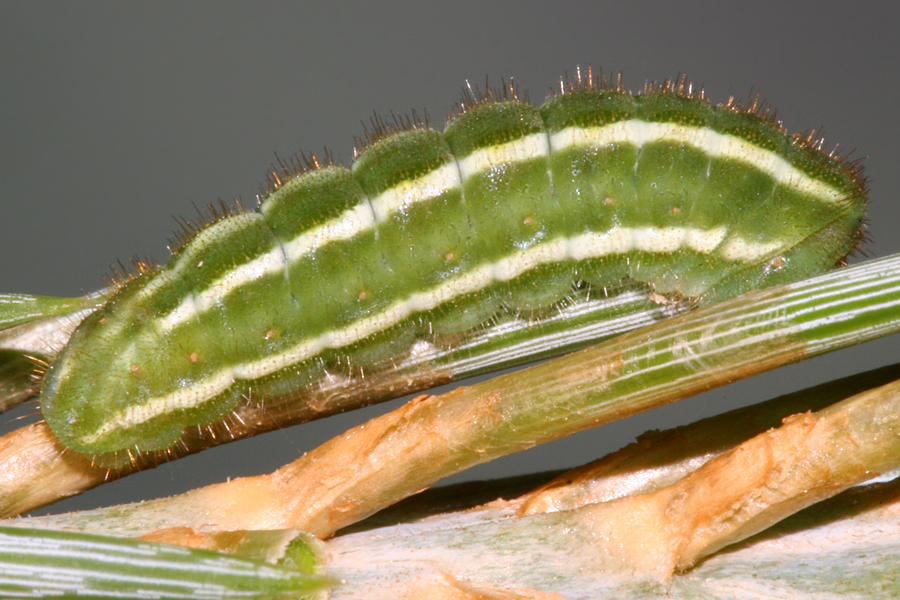
| # 3 Fourth Instar - Dorsal View - 1 July 2009 |
| #
3 Fourth
Instar - showing the brown mark called the thoracic shield - 1 July 2009 |
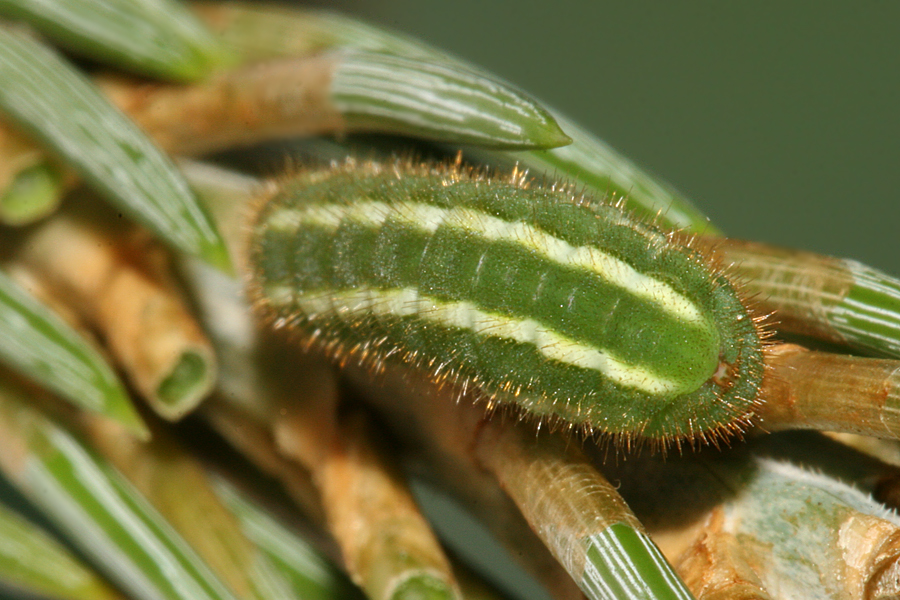
| #
1 Dorsal View -
Molted to fourth instar on 29 June 2009 Photo taken on 30 June 2009 |
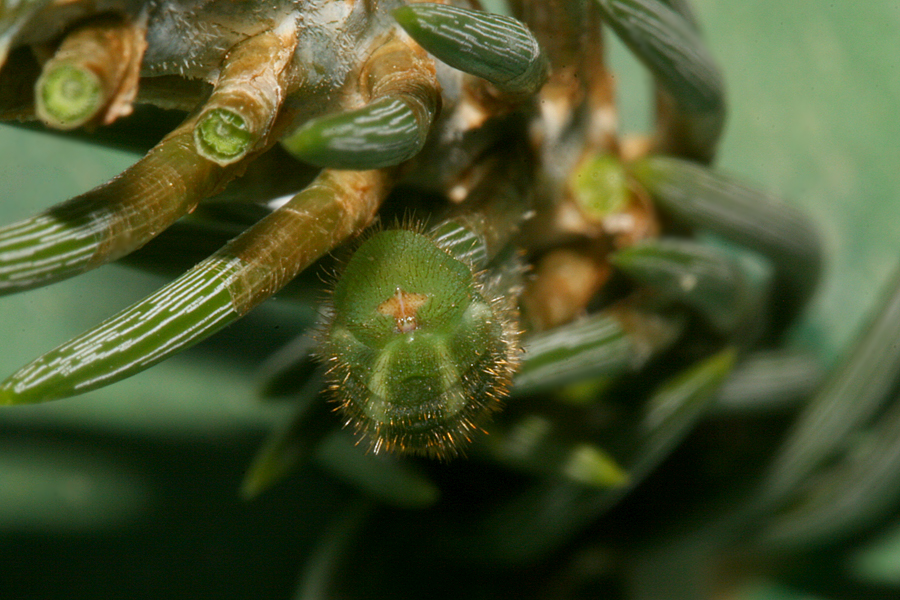
| #
1 close-up of
mark called a thoracic shield and orange hairs - 1 July 2009 Caterpillar is now eating the whole needle tip rather than burrowing inside Notice the one pine needle at the bottom is completely eaten. |
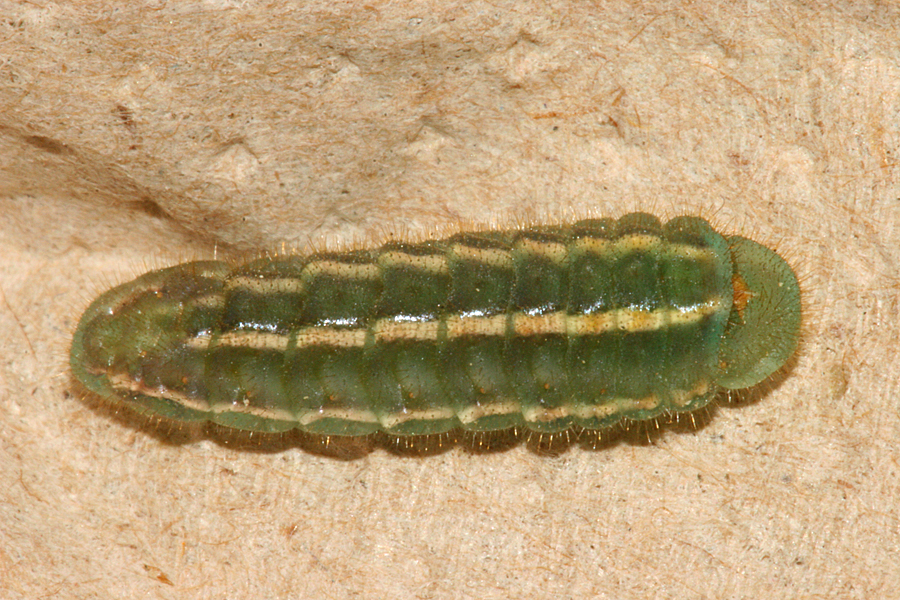
| #1
Larva changed color, walked off plant and stopped eating to prepare for pupation 10 A.M. 4 July 2009 |
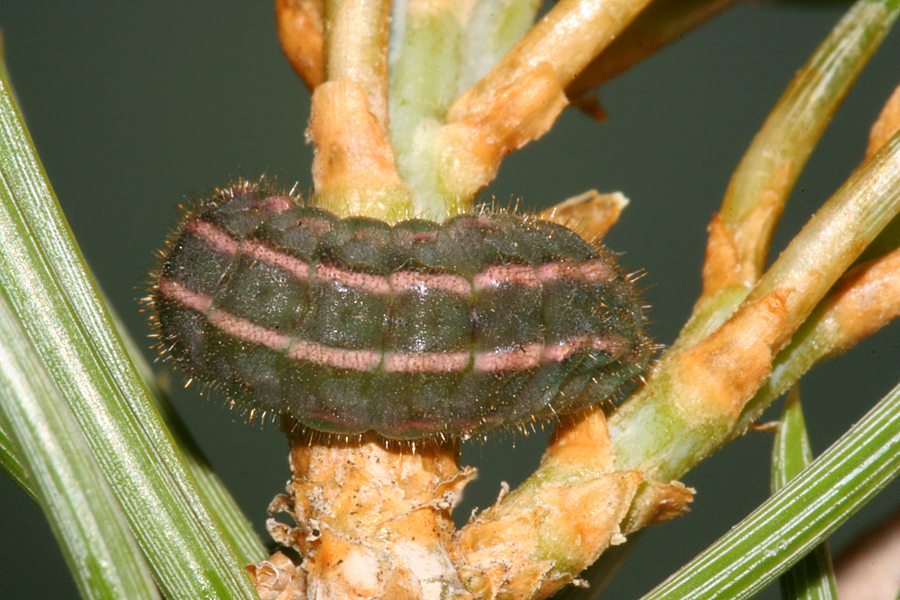
| #1
Larva changed to pink stripes on a gray-green
color Photo taken at 6:15 P.M. 4 July 2009 |
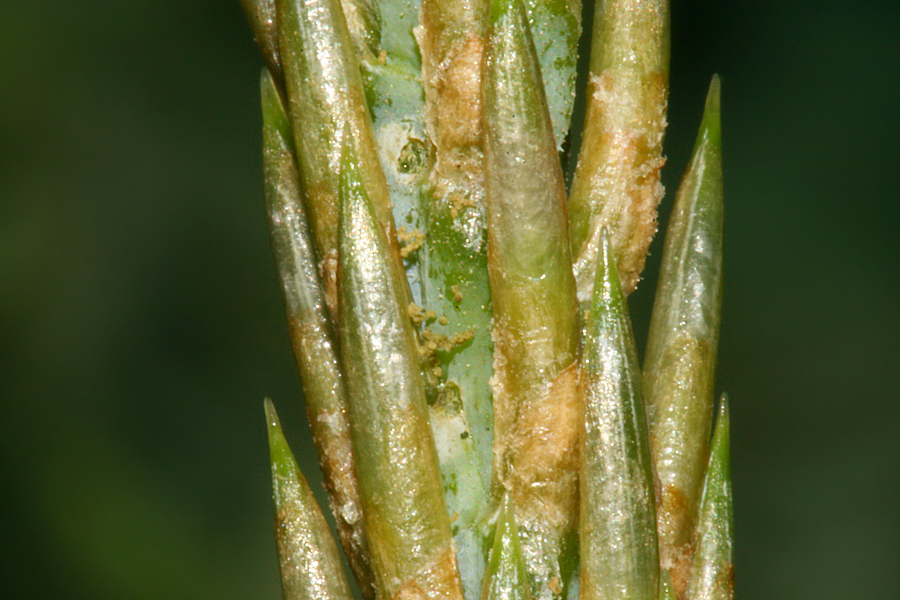
| The hole in the twig and frass debris made by a young larva |
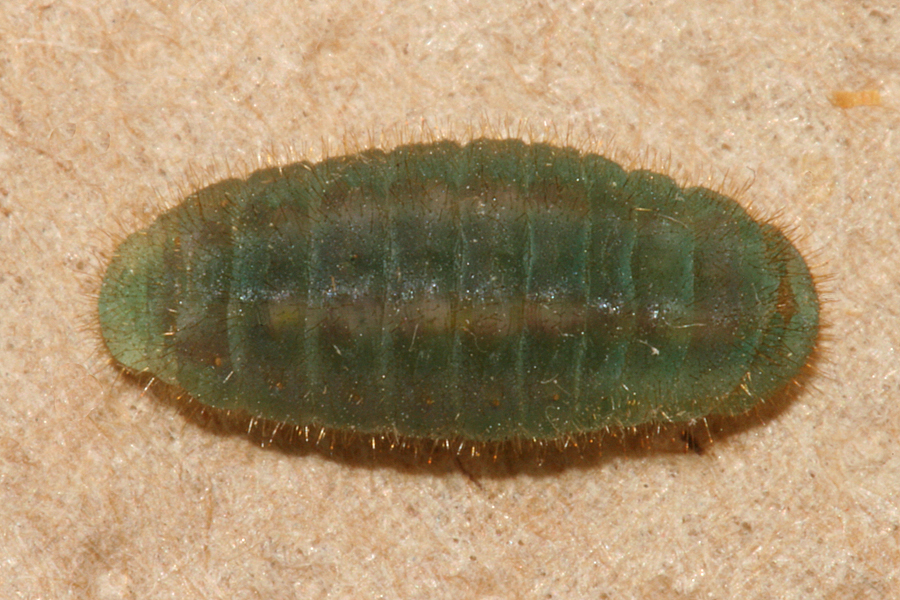
| #1 Pre-pupa 7 July 2009 |
| #1 Pupa 8 July 2009 - Pupated then hibernated |
#1
pupa 8 July 2009 |
#1
pupa 8 July 2009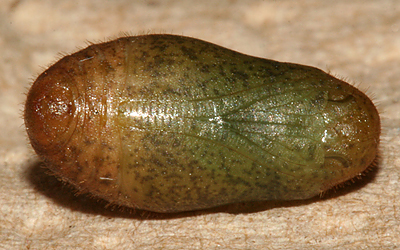 |
On February 13, 2010 pupa was removed from hibernation |
|
#1 pupa 25 February 2010 Evening before eclosure 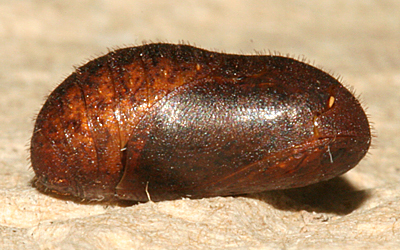 |
#1 pupa 25 February 2010 Evening beforeeclosure 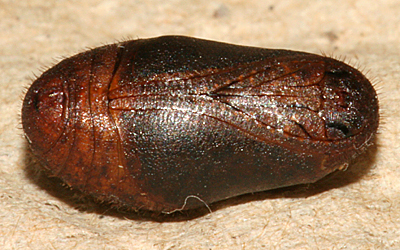 |
| PHOTO
DETAILS - ©Nicky Davis Jack Harry located 2 female Pine Elfins on June 9, 2009 LOCATION: Black Rock Canyon, Tooele County, Utah GPS 40.01.5706 N, 112.11.5613 W, Elevation 6497 feet Females laid 4 eggs 9 June, 10 eggs 12 June, 2009. They stopped laying after 9 June so on 12 June we cut fresh Pinyon Pine boughs, put a small sprig in a bouquet in a medicine bottle and used a plastic container with some chiffon under the plastic lid. I used a small lid with a little piece of honey-soaked sponge in it for the females to nectar on as needed. I set the container holding the females in the sun on grass in the afternoon for 1/2 hour, then in the house in the dark 1/2 hour, back out in the sun again and so on. I also spritzed the pine bough just a bit for added hydration. The females liked this arrangement and laid 10 eggs. They only laid on the unopened pine needle tips that were cut the same morning. I wanted to have new, fresh pine boughs when the larvae hatched so I popped the eggs off the pine to store them which resulted in half the eggs not hatching. At least I believe that's why they all didn't hatch. OVA PHOTOS 2 photos showing the eggs oviposited on the unopened needles at the tips of the boughs. LARVA PHOTOS #2 First instar on 15 June 2009 #3 Second instar on 20 June 2009 #1 Set to molt to third instar 23 June 2009 # 2 Dorsal View - Molted to third instar on 24 June 2009, Photo taken on 26 June 2009 # 2 Lateral View - Molted to third instar on 24 June 2009, Photo taken on 26 June 2009 # 3 Fourth Instar - Lateral View - 1 July 2009 # 3 Fourth Instar - Dorsal View - 1 July 2009 # 3 Fourth Instar - showing the brown mark on the back of head and shows the eating pattern in the three pine needles that have been completely consumed - 1 July 2009 # 1 Dorsal View - Molted to fourth instar on 29 June 2009, Photo taken on 30 June 2009 # 1 close-up of the mark on the back of the head and the orange hairs - 1 July 2009 Caterpillar is now eating the whole tip of the needles rather than burrowing inside. Notice the one pine needle at the bottom is completely eaten. #1 Larva changed color, walked off plant and stopped eating to prepare for pupation 10 A.M. 4 July 2009 #1 Larva changed color to pink stripes on a gray-green background. Photo taken at 6:15 P.M. 4 July 2009. I set him back on the plant but he continued changing color and still did not eat. #1 Pre-pupa 9:54 A.M. 7 July 2009 #1 Pupa formed 8 July 2009 PUPA PHOTOS Lateral and ventral view of the #1 Pupa formed 8 July 2009 - Pupated then hibernated. After 45 days the pupae were put in a chiffon hammock and suspended in a container with some water in the bottom to keep them hydrated. They were then put in the fridge at about 40 degrees. On October 30, 2009 they will be transferred to a small fridge with the temperature at about 30 to 35 degrees F. The goal is to keep them hydrated and at the temperatures they encounter in the wild insulated under snow. Pupae were removed from hibernation on 13 February 2010 and the adults eclosed 13-14 days later. LIFE HISTORY: Ova: 6-7 days Larvae: 23 to 27 days Pupae: Hibernate as pupae. Eclosed 13-14 days after removal from hibernation Adults: Unknown Broods: one Hibernation: Overwinter as pupae ADULT HOST PLANT The adult Pine Elfin butterflies often use the Ceanothus martini, Martin's Ceanothus blossoms as a nectar source in Black Rock Canyon. For photos of this plant, click on
LARVAL HOST PLANT
 Pronuncition kal - o - friss air-eh-fawn |